
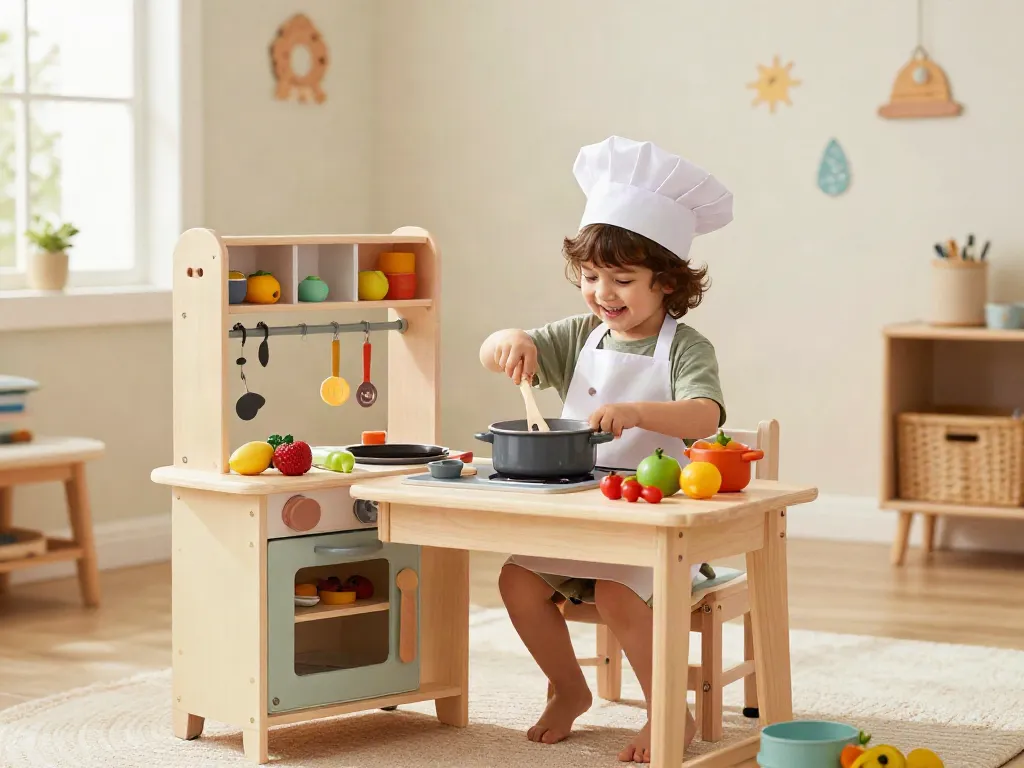
The Benefits of toy kitchen Play for Child Development
In the realm of child development, play is not merely a leisure activity; it is a fundamental aspect of growing up. Engaging in pretend play, especially through a toy kitchen, can significantly enhance a child's growth across various domains. This type of play serves as a platform for creativity, cognitive development, and social interaction, all of which are crucial during formative years.
Understanding the Role of Pretend Play in Childhood
Pretend play, also known as imaginative play, allows children to explore their world and express their emotions. A toy kitchen provides a safe environment for this exploration, enabling children to mimic adult behaviours, such as cooking and hosting. This form of play not only nurtures their creativity but also encourages them to develop problem-solving skills as they navigate different scenarios.
Key Skills Developed Through Cooking Play
When children engage in cooking play, they develop several essential skills, including:
- Cognitive Skills: Planning, organisation, and following sequences are all part of cooking. Children learn to measure ingredients, understand quantities, and even experiment with different recipes.
- Motor Skills: Handling play utensils, cutting food items, and setting up their toy kitchen enhances fine motor skills and hand-eye coordination.
- Emotional Intelligence: Through role-play, children can express their feelings and understand others' emotions, improving their empathy and social skills.
How toy kitchens Enhance Social Interactions
Playing with a toy kitchen often involves multiple children, which promotes social interaction. Kids learn to share, negotiate roles, and collaborate when creating meals together. Such teamwork prepares them for future social engagements, teaching them the value of communication and cooperation. Furthermore, these interactions lay the groundwork for developing friendships as they engage in collaborative play scenarios.
Choosing the Right toy kitchen for Your Child
Parents often face the challenge of selecting the perfect toy kitchen for their child. The choice can significantly impact how children engage with their play, and several factors come into play when making this decision.
Top Features to Look For in a toy kitchen
When browsing for a toy kitchen, consider the following features:
- Size: Ensure the kitchen fits the available space and is appropriate for your child's height and age.
- Realistic Elements: Look for kitchens that include realistic features like lights, sounds, and accessories that simulate a real cooking environment.
- Durability: Choose sets that are robust and can withstand vigorous play.
Material Types: Wood vs Plastic Considerations
The material of a toy kitchen can influence durability, appearance, and even safety. Wooden kitchens are often seen as more aesthetically pleasing and durable, lasting through multiple play cycles. However, plastic kitchens can be lighter and often come with interactive features that might appeal more to younger children. Each material has its pros and cons, so consider your child’s preferences and play habits.
Budgeting for Quality toy kitchens in 2026
In 2026, parents are encouraged to invest in quality over quantity. While toy kitchens can vary widely in price, a well-built model can provide years of enjoyment. Aim to research and compare options, looking at features and durability to assess value for money, rather than solely focusing on the lowest price. This long-term investment is likely to provide greater satisfaction and engagement for your child.
Safety Considerations for toy kitchens
Safety is a paramount concern when selecting any toy, including play kitchens. It's essential for parents to be aware of the materials used and the appropriate ages for various kitchen sets.
Identifying Safe Materials and Construction
Ensure that the toy kitchen is made from non-toxic materials, especially if your child is younger and may put things in their mouth. Look for certifications or labels that indicate the toy has undergone safety testing. Construction quality matters too: verify that there are no sharp edges, and that all parts are securely attached to prevent choking hazards.
Age Appropriateness for Different Kitchen Sets
Not all toy kitchens are created equal. Some are designed for toddlers, while others are suitable for older children. Be mindful of the age recommendations given by manufacturers to ensure safe and enjoyable play. Generally, kitchens with small parts may be best suited for older children who won't put items in their mouths.
Tips for Preventing Accidents During Play
To facilitate safe play, establish boundaries and guidelines for use. Supervise young children during playtime, especially if they are using accessories that could pose a choking hazard. Additionally, regularly inspect the kitchen set for wear and tear, ensuring all pieces are in good condition.
Engaging Your Child with Creative Play Scenarios
Encouraging imaginative play not only enhances the benefits of a toy kitchen but also makes the experience more enriching for your child. Here are some strategies for making the most out of their playtime.
Incorporating Educational Themes into Play Cooking
Using themes can add an educational layer to play. For example, parents can introduce concepts such as healthy eating by involving fruits and vegetables in the pretend meals. Cooking from various cultures can also spark interest in geography, broadening their world view while they play.
Ideas for Themed Cooking Parties and Activities
Hosting themed cooking parties can be a fun way to engage children. Consider a “mini chef” competition or a “cooking show” format, where children can showcase their culinary creations or act out roles of cooking show hosts. These activities not only promote creativity but also encourage public speaking skills and confidence.
Using toy kitchens to Foster Family Bonding
Engaging in play with your child can strengthen family bonds. Join in their imaginative scenarios, perhaps taking on a role as a customer or fellow chef. This interaction fosters communication and connection, making the toy kitchen a central part of family fun.
Future Trends in toy kitchens: What's Next?
The landscape of children’s toys continues to evolve, and toy kitchens are no exception. As technology and environmental considerations rise to the forefront, the future of play kitchens appears bright.
Innovative Designs and Features to Watch For
Manufacturers are beginning to incorporate innovative materials and designs, such as modular kitchens that can be rearranged or expanded as children grow. Smart kitchens, equipped with interactive screens that guide children through recipes or play scenarios, are also on the horizon.
Eco-Friendly Trends in Children's Toys
With a growing awareness of environmental impact, more brands are focusing on sustainability. Expect to see more kitchens made from recycled or biodegradable materials, providing parents with eco-friendly choices without sacrificing quality.
How Technology Is Shaping the Future of Play Kitchens
Technology is increasingly influencing the way children engage with their toys. Features such as augmented reality (AR) can transform a traditional play kitchen into an interactive educational tool. This integration of tech encourages STEM learning through play, making the toy kitchen not only a source of fun but also a valuable educational resource.